Some of the most memorable travel experiences happen not at landmarks or viewpoints, but at a plastic table on a side street, eating something extraordinary that costs less than a dollar. Food is the fastest way into a culture, and planning your trip around it leads to discoveries that no museum or monument can match.
Why Food Should Drive Your Itinerary
Every region has dishes that exist only there, prepared with local ingredients and techniques passed down through generations. These dishes rarely travel well because they depend on freshness, specific varieties of produce, or cooking methods that cannot be replicated elsewhere. Eating them at their source is not just better; it is often the only way to experience them at all.
Food also leads you to places you would never otherwise visit. The best noodle soup in Hanoi might be in a residential alley. The finest barbecue in Bangkok could be at a stall that only operates between six and nine in the evening. Following food takes you off the tourist trail naturally and inevitably.
Research Before You Go
Start with regional specialities rather than restaurant lists. Every destination has signature dishes, and knowing what they are before you arrive gives you a framework for exploration. In Penang, that means char kway teow and assam laksa. In Oaxaca, it means mole and tlayudas. In Tokyo, it means neighbourhood-specific ramen styles that vary from district to district.
Food blogs written by locals or long-term residents are far more reliable than mainstream travel publications. Look for writers who focus on street food and local eateries rather than fine dining. Mark Wiens, Migrationology, and local food bloggers in your destination language are excellent starting points.
Markets Are Your Best Friend
If you only have time for one food experience in any city, make it the main market. Central markets are where locals shop, and they offer the most concentrated and authentic food experience available. Walk the entire market first without buying anything, then return to the stalls with the longest local queues.
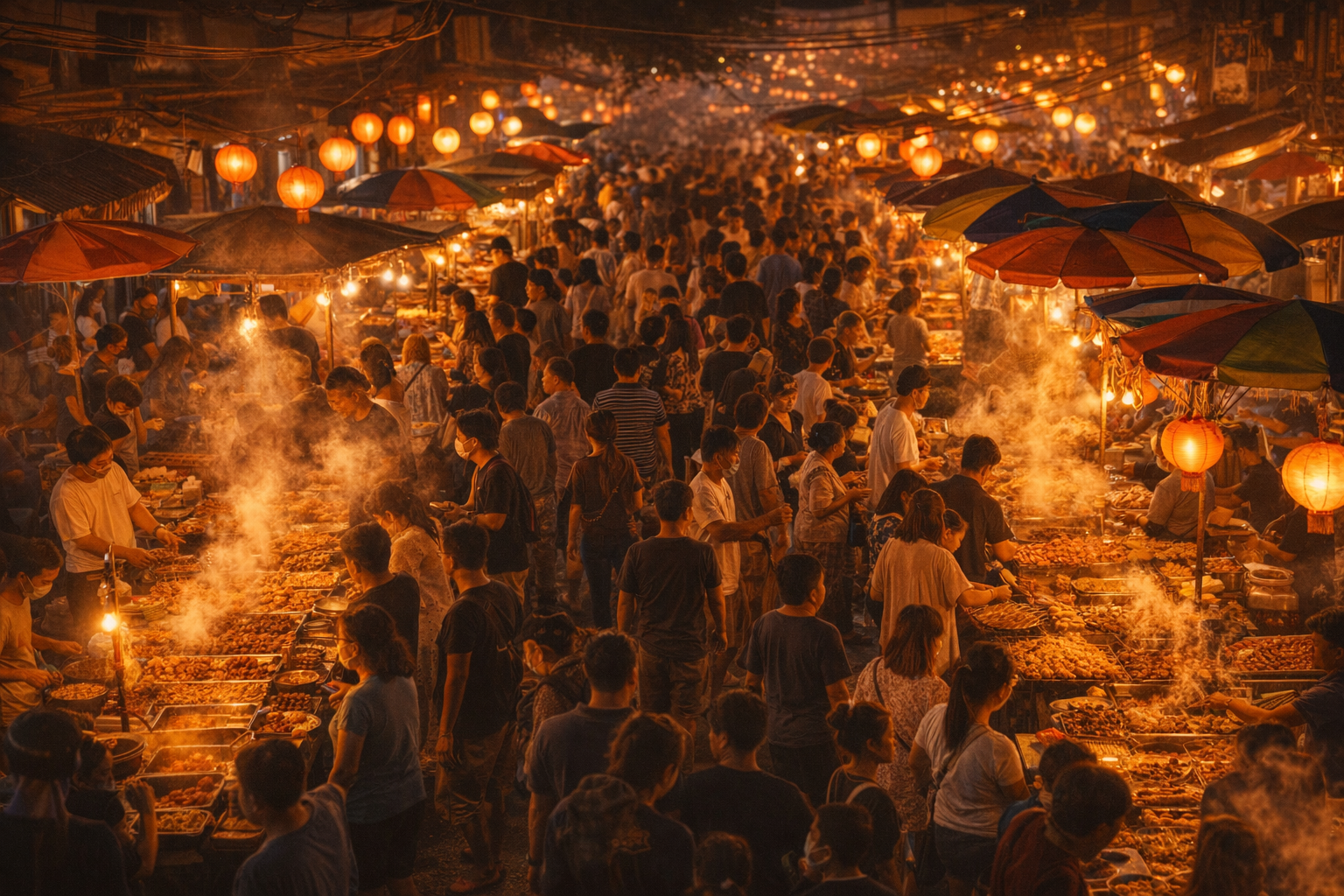
Morning markets are best for breakfast foods and fresh produce. Night markets offer the widest variety of prepared foods and the most vibrant atmosphere. In Southeast Asia, night markets are practically a cultural institution and often the highlight of any food-focused trip.
Street Food Safety
The fear of getting sick from street food is understandable but often overblown. The safest street food stalls are the busiest ones, because high turnover means fresh ingredients and food that does not sit around. Choose stalls where you can see the food being cooked to order, and avoid anything that has been sitting in the open for an extended period.
Your stomach needs time to adjust to new bacteria, so start with cooked foods and build up gradually. Avoid raw vegetables washed in local water until your system has acclimatised. Drink bottled water and skip ice in areas where water quality is questionable.
Cooking Classes and Food Tours
A cooking class in your destination is one of the best investments you can make. It teaches you about local ingredients, techniques, and food culture in a way that simply eating never can. The skills and recipes you bring home extend the trip long after you return, and the meals become a way to share your travel experience with friends and family.
Guided food tours can be excellent, particularly in cities where language barriers make independent exploration challenging. The best tours are small group, led by locals, and focus on places you would struggle to find on your own. They also provide context that transforms eating into understanding.
Building Your Food Itinerary
Structure your days around meals rather than sightseeing. Identify a must-try dish for breakfast, lunch, and dinner, then fill the gaps between with exploration. This approach naturally distributes your sightseeing across different neighbourhoods and ensures you never waste a meal on mediocre tourist food. The best travel days are the ones where every meal is an event.